Blog
AI transformation for SMEs and mid-caps: notes from the field
Field notes and method on AI transformation for SMEs and mid-caps: AI agents, .NET integration, process automation, real-world cases.
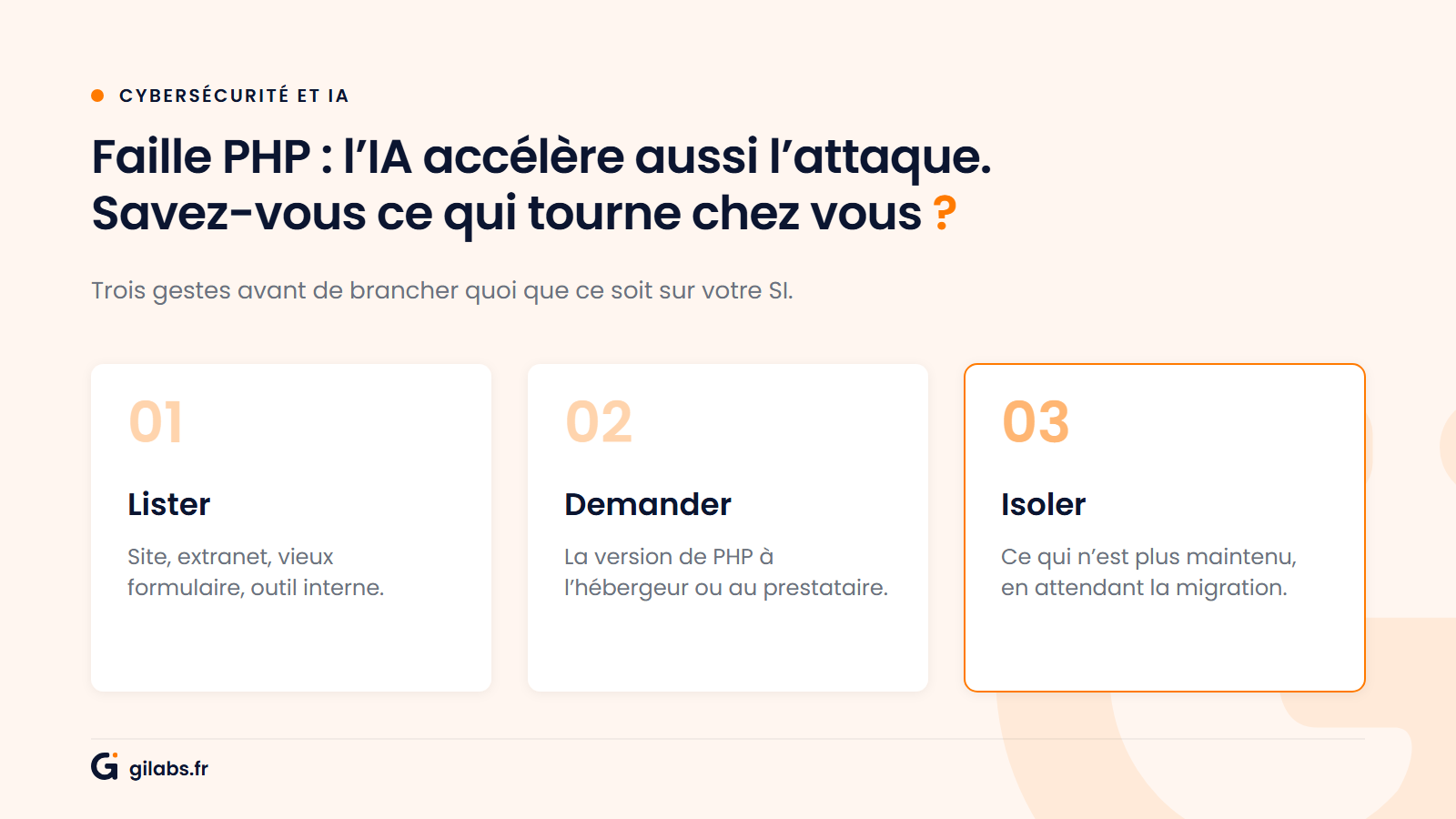
The PHP flaw had been known for two years. AI found the key in one summer.
Two critical PHP flaws, French government sites taken offline. The underlying defect had been known since 2024, and AI sped up its exploitation. The real risk: not knowing what runs on your servers.
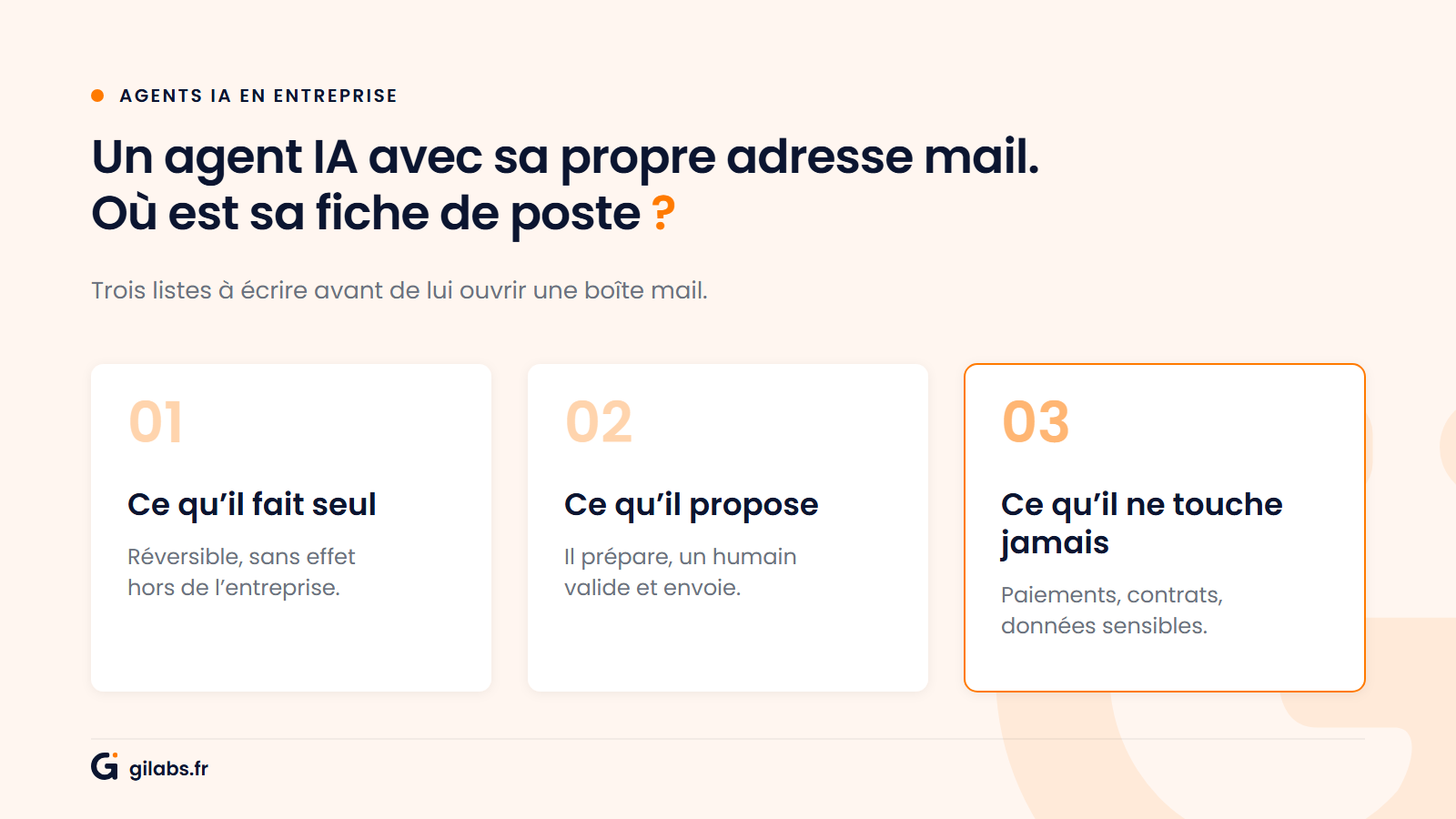
An AI agent with its own email address. Where is its job description?
Google has announced an agent with its own account, email address and action log. Before handing it the keys, write three lists: alone, proposes, never.
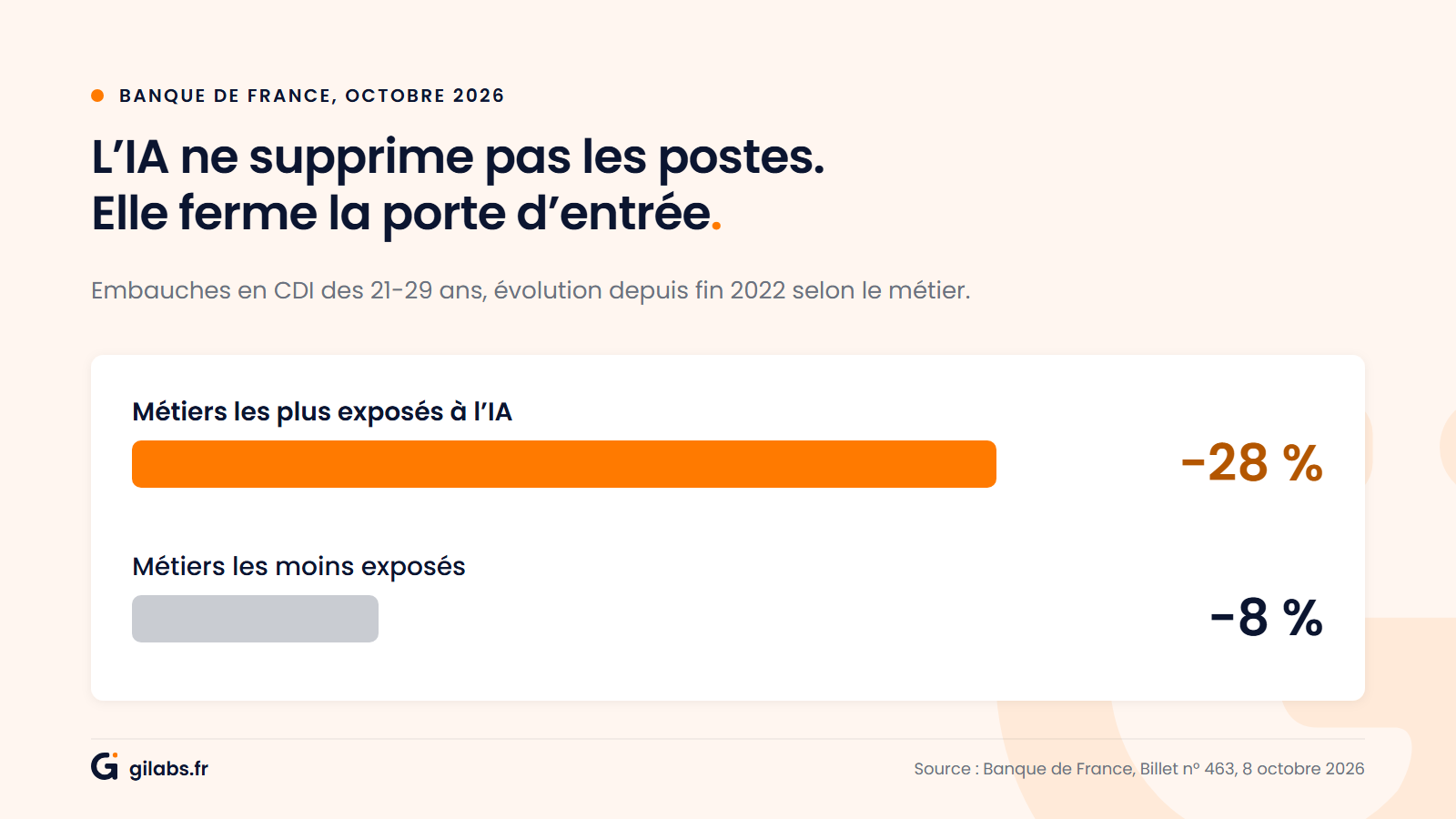
AI is not cutting jobs. It is closing the entry door.
Among 21-29 year-olds in France, permanent hires are down 28% in the occupations most exposed to AI. Total employment has not moved. What it means for an SME.
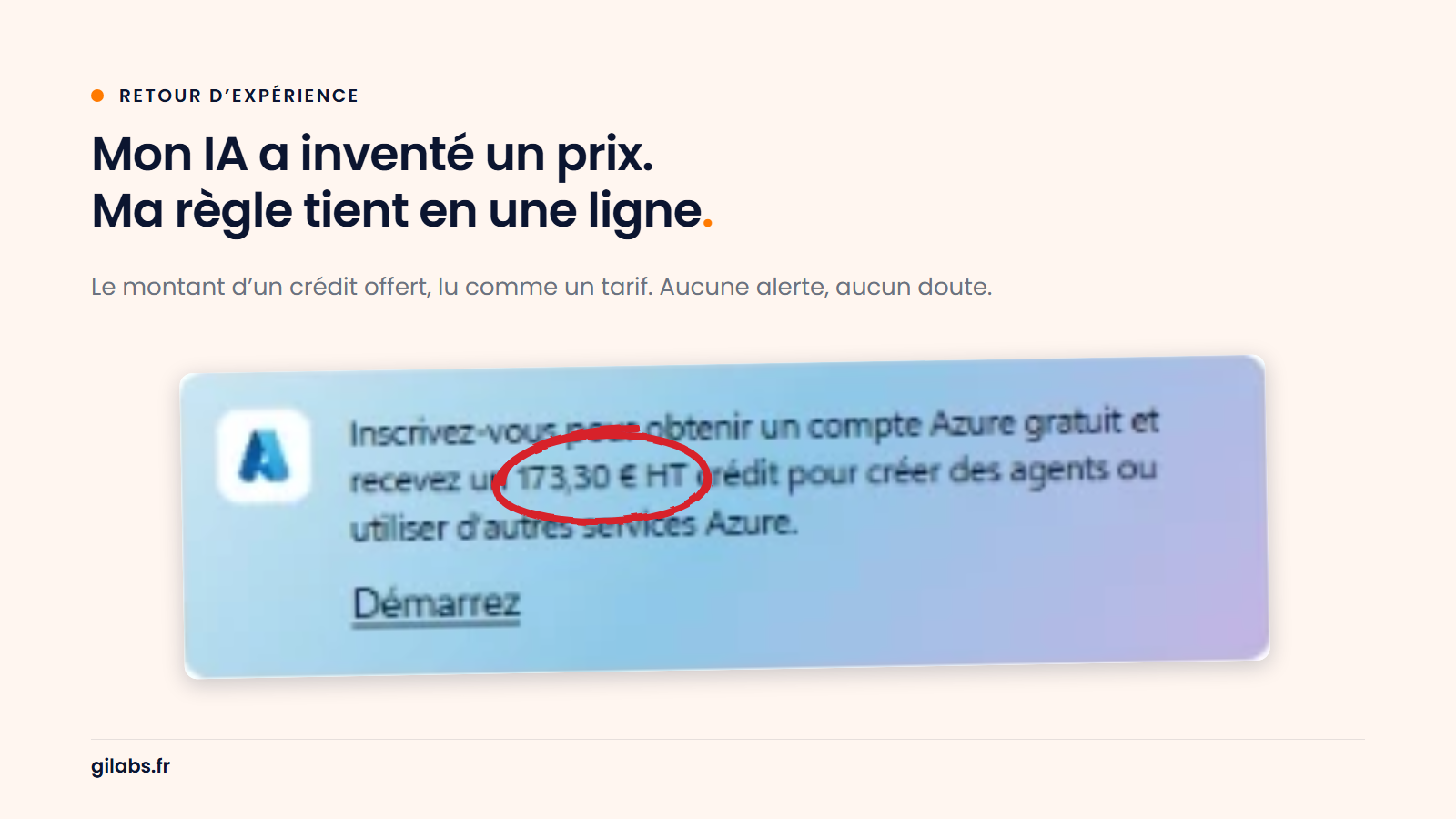
My AI made up a price. My rule fits on one line.
An AI read a free credit as a price, with no warning at all. What that near miss says about the framework a small business needs to use AI.
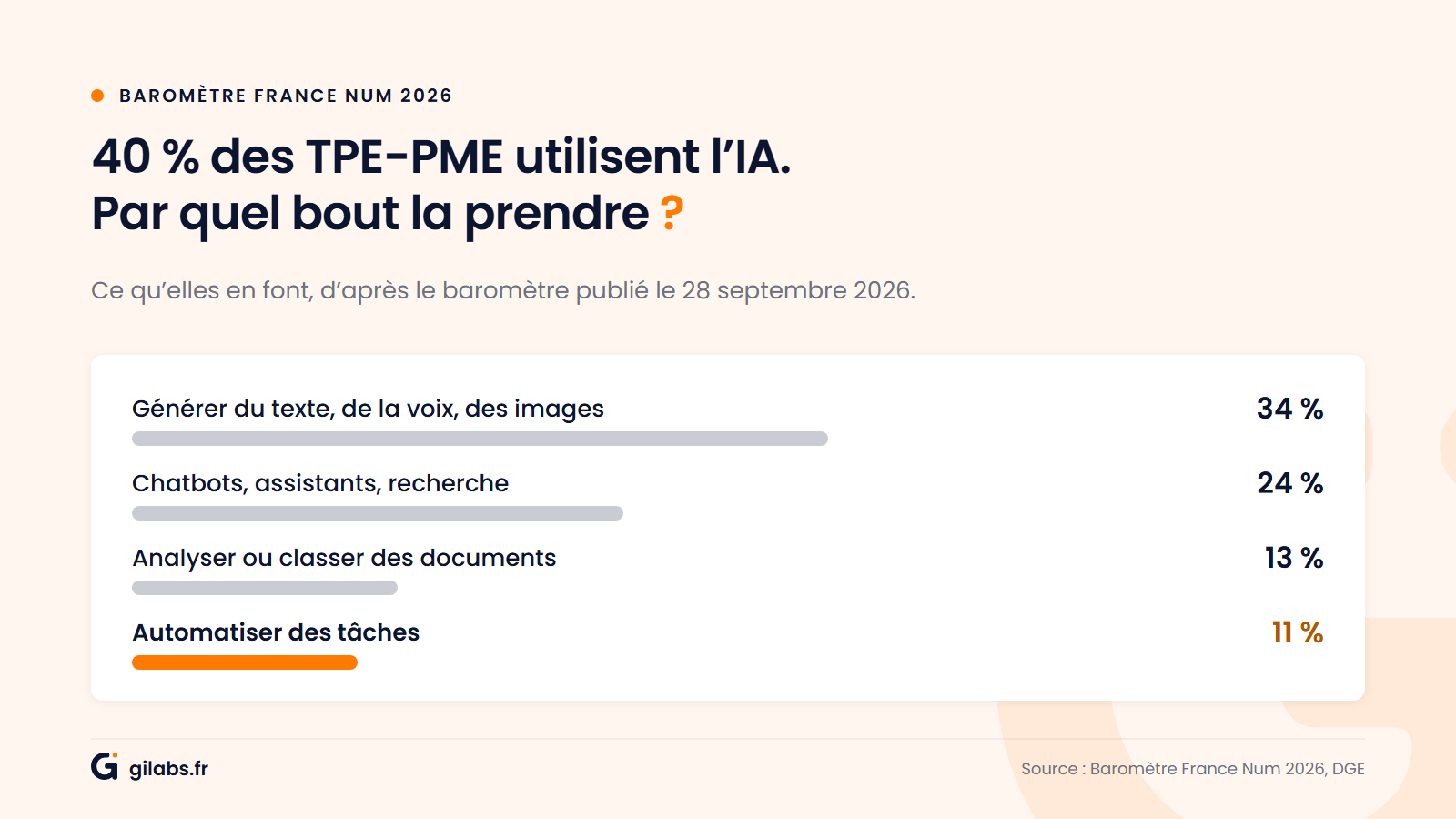
40% of French small businesses use AI. Where do you actually start?
Four in ten French small businesses use AI, mostly to write. One in ten automates a task. What the France Num 2026 survey says about the right starting point.
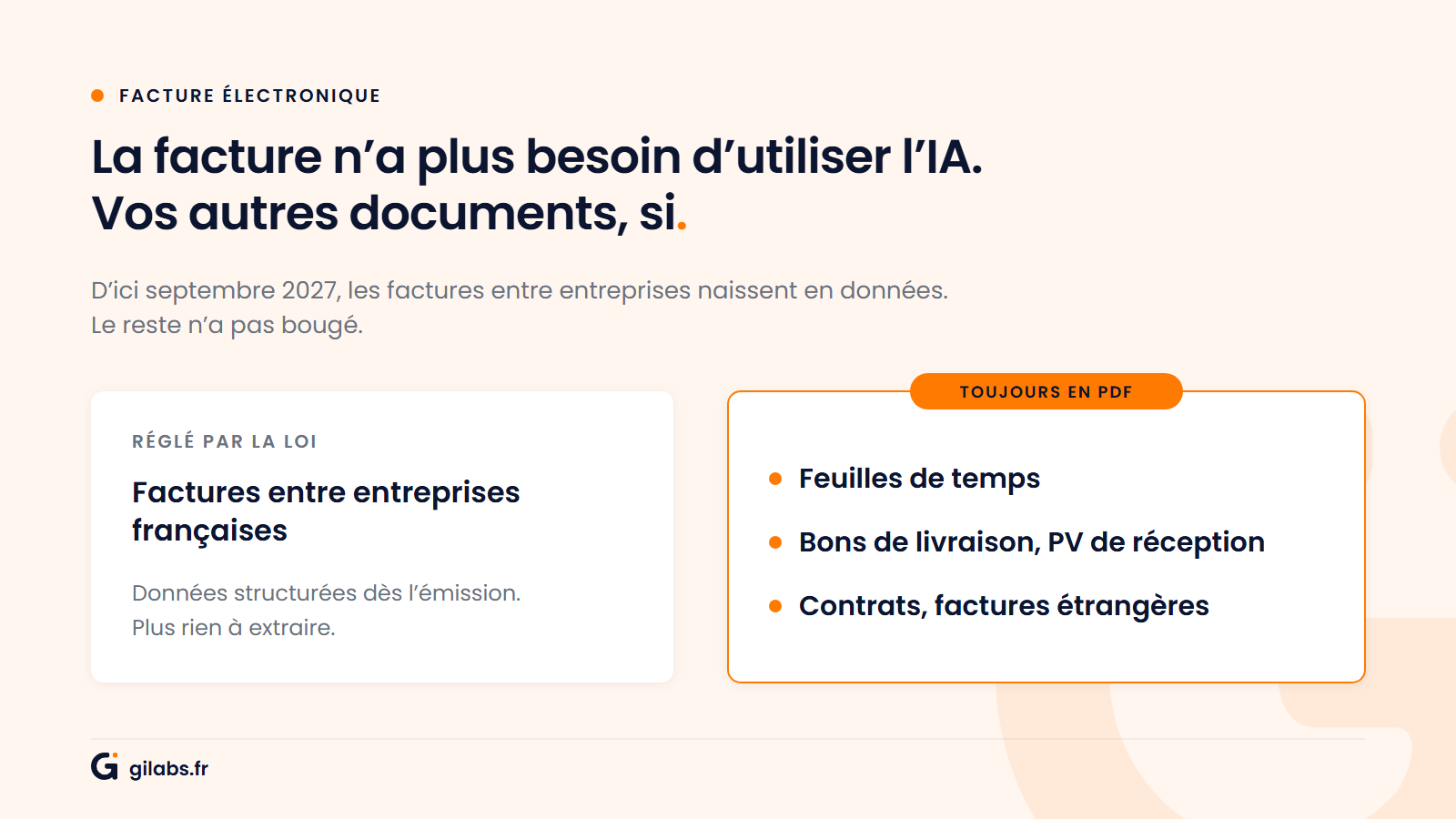
Invoices no longer need to use AI. Your other documents still do.
Since September, French invoices arrive as data: nothing left for an AI to read. Document extraction is not going away, it is changing targets.
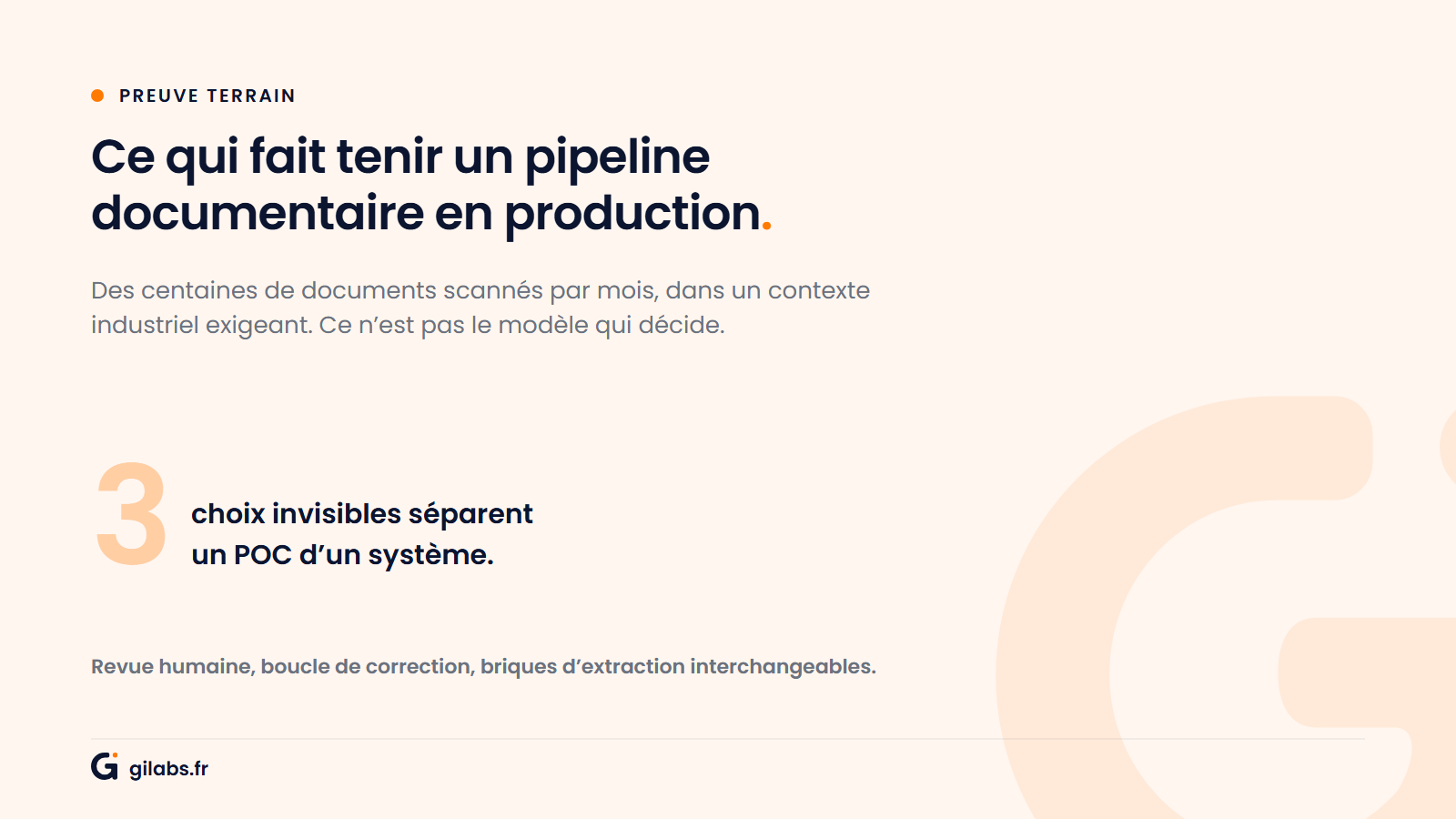
What keeps a document pipeline alive in production
Three engineering decisions separate an AI proof of concept from a system that runs every day: human review, a correction loop, and interchangeable extraction engines.
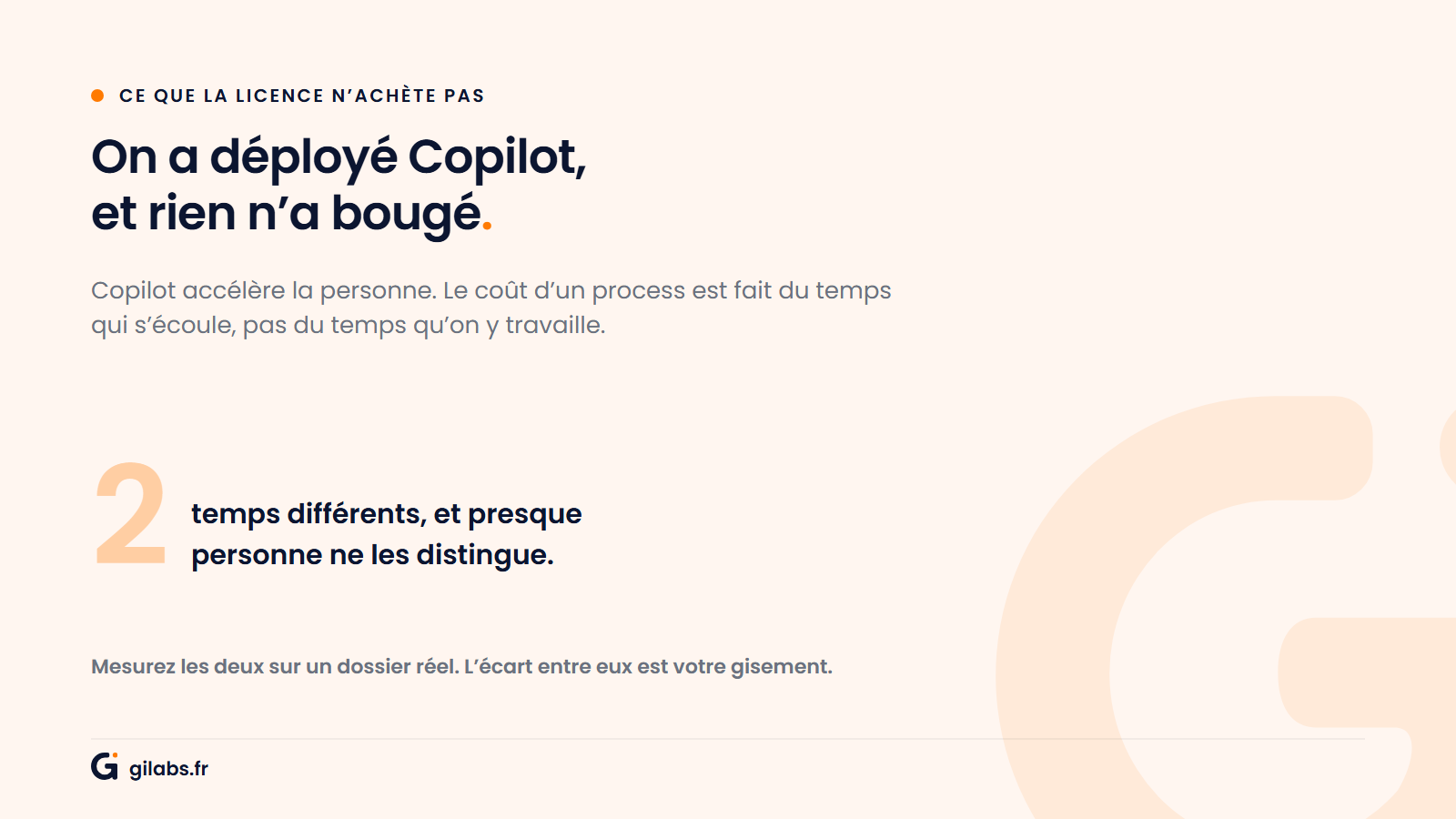
We rolled out Copilot, and nothing changed in the accounts
Copilot speeds up the person. What a process costs is elapsed time, not hands-on time. Here is how to measure both, and why it decides your AI budget.
A 30-day AI diagnostic, one day of your time
What blocks an AI diagnostic is almost never the price, it is the load on the team. Here is the exact figure: three fixed milestones, a few interviews, one decision.
The AI POC that will never reach production as-is
A Python POC that convinces in a demo but stays stuck for six months does not need to be rewritten in C#. It needs to be exposed behind an API and brought into the rest of the estate's rules.
Who said what, without voice recognition: diarization by metadata
Attributing every sentence in a meeting summary to the right person without creating biometric data. Three approaches compared, only one creates no voice fingerprint.
The pivot that saved a voice AI project: think field-first before you code
A project assumed a technician would call an automated assistant to dictate a job estimate. Four very concrete obstacles showed the idea didn't hold up in the field.
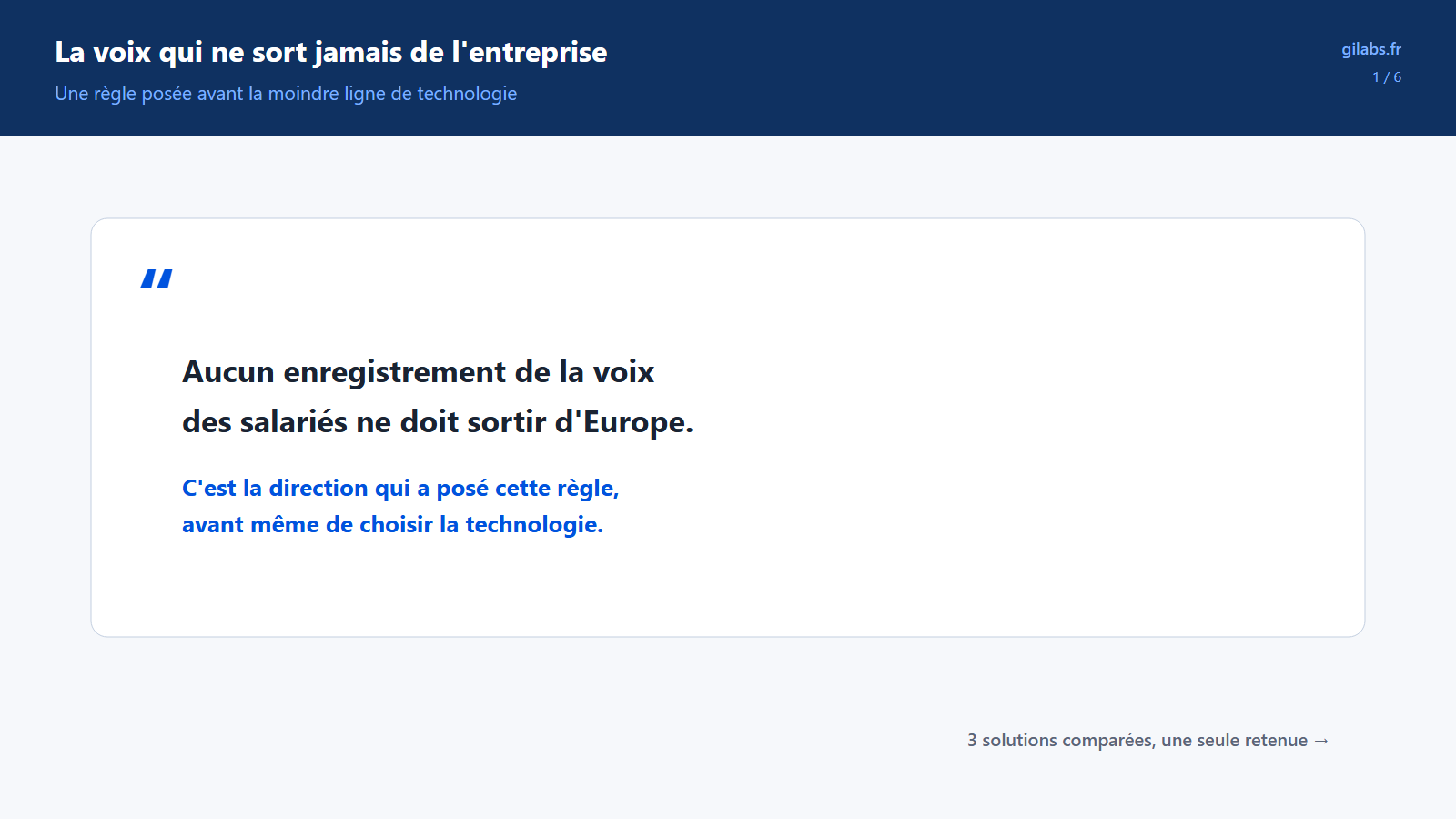
Employee voice recordings should never leave Europe: a rule set before the technology
To produce a reliable meeting summary, a leadership team first settled a matter of principle: where do voice recordings actually go? Three options compared, one chosen.

The 30-Day AI Diagnostic: why I packaged my offer into five fixed deliverables
A fixed-scope package with five written deliverables, not an audit that stops at a report: why a packaged AI consulting offer gets decided faster than an open-ended conversation.
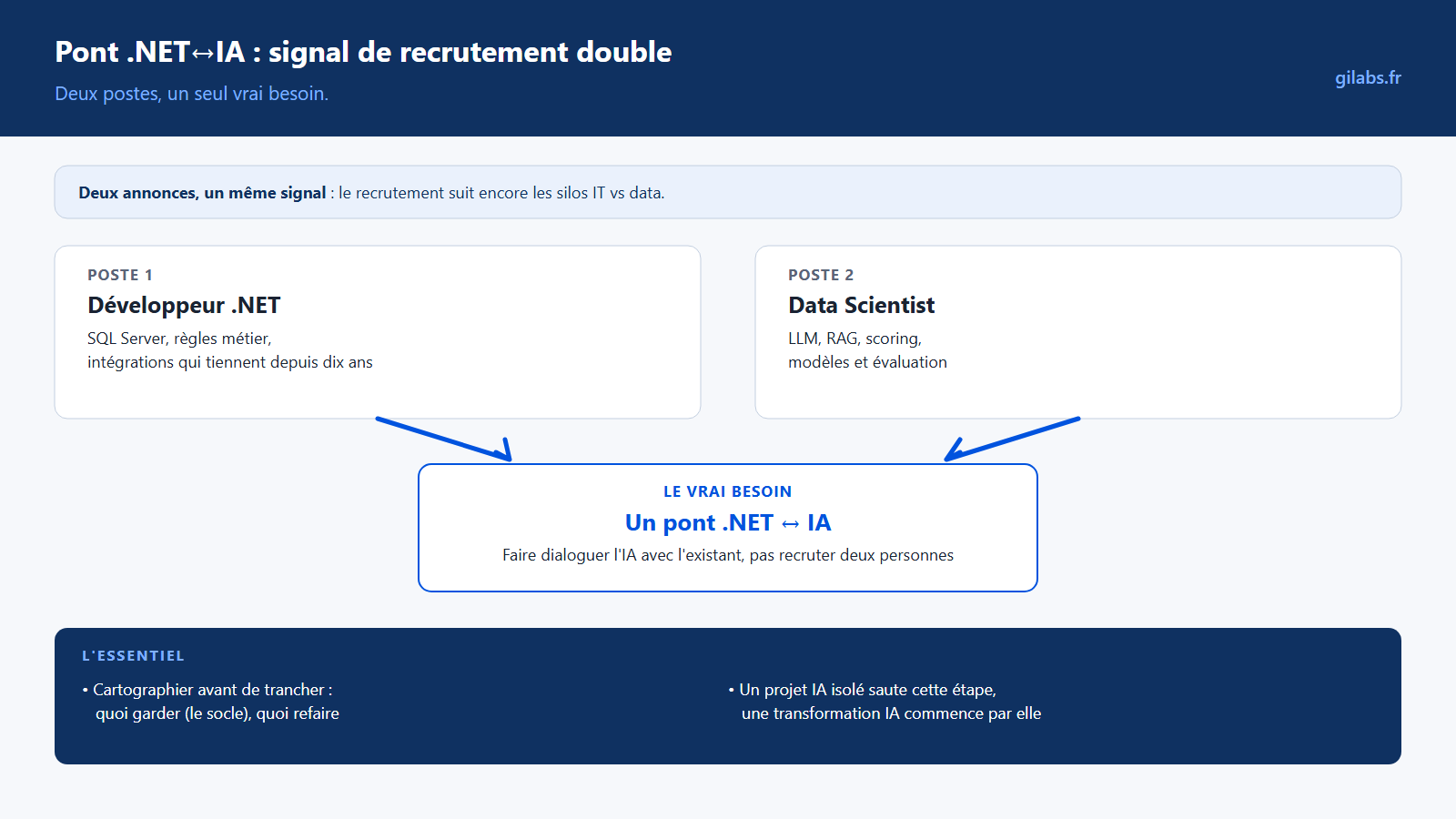
Hiring a .NET developer and a data scientist at the same time: one need, not two
A company that hires a .NET developer and a data scientist at the same time is sending a clear signal: it does not yet know it is looking for a single person.
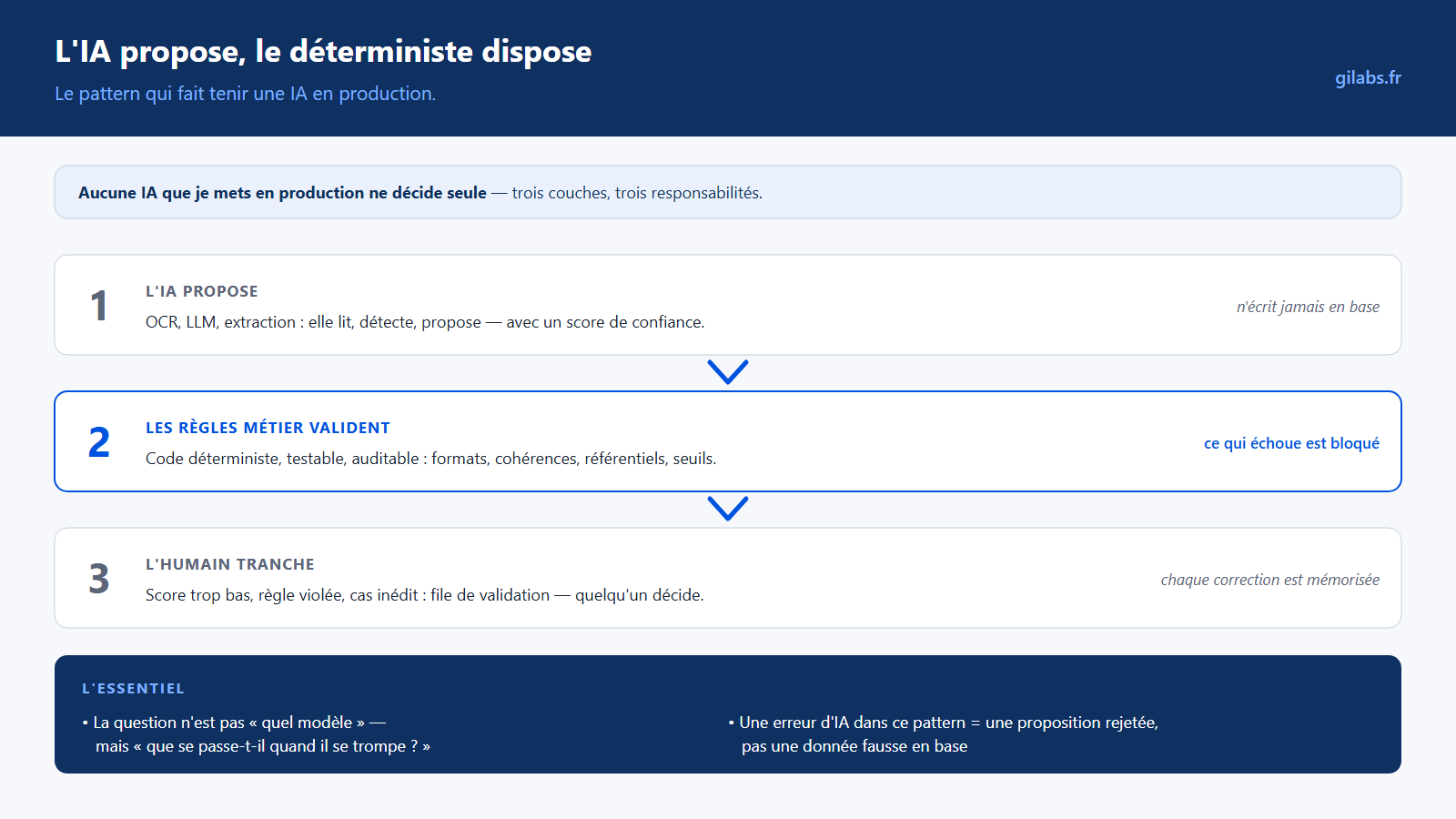
AI proposes, deterministic logic disposes: the pattern that keeps AI production-ready
AI in production is not AI that decides on its own. It is AI that proposes, to a system that has the right to say no. The three-layer architecture pattern behind it.

Your problem is not (yet) an AI problem
"We want AI on our technical documentation. Where is your documentation? In binders." The data foundation comes before AI, and that is good news.

Concierge first, code second: why I spent weeks automating nothing
Before writing the first line of my prospecting agent, I did the work by hand, for a long time. That step, not the code, is what actually makes the difference.

"It's expensive": a category problem, not a pricing problem
An AI tool is an expense. An AI transformation is an investment. Confusing the two lenses explains most of the "it's too expensive" reactions heard at SMEs.
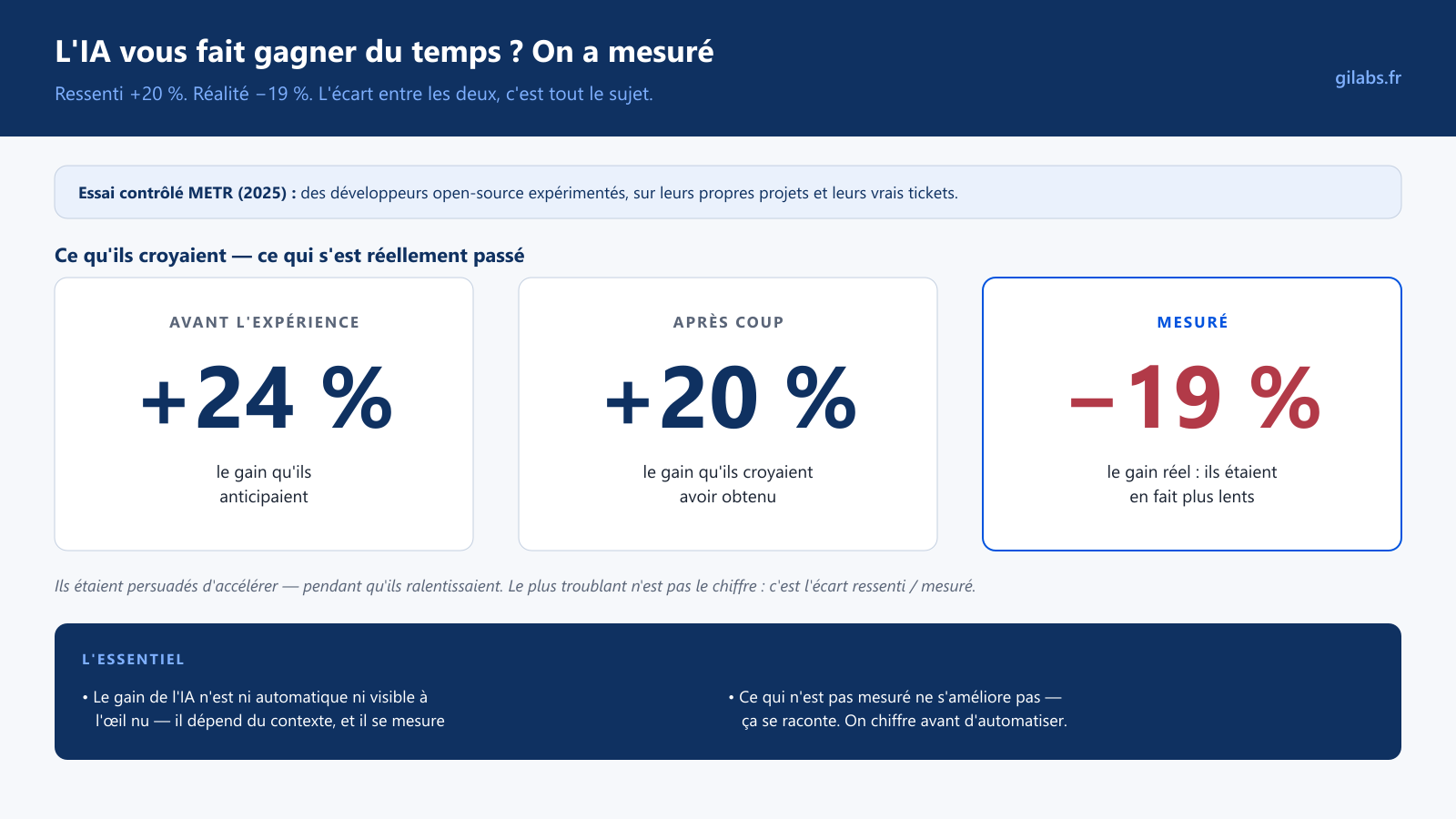
The 2025 METR study: developers thought they were 20% faster, they were 19% slower
A controlled trial with experienced developers reveals a striking gap between perception and measurement. AI's gain is neither automatic nor free: it has to be measured.
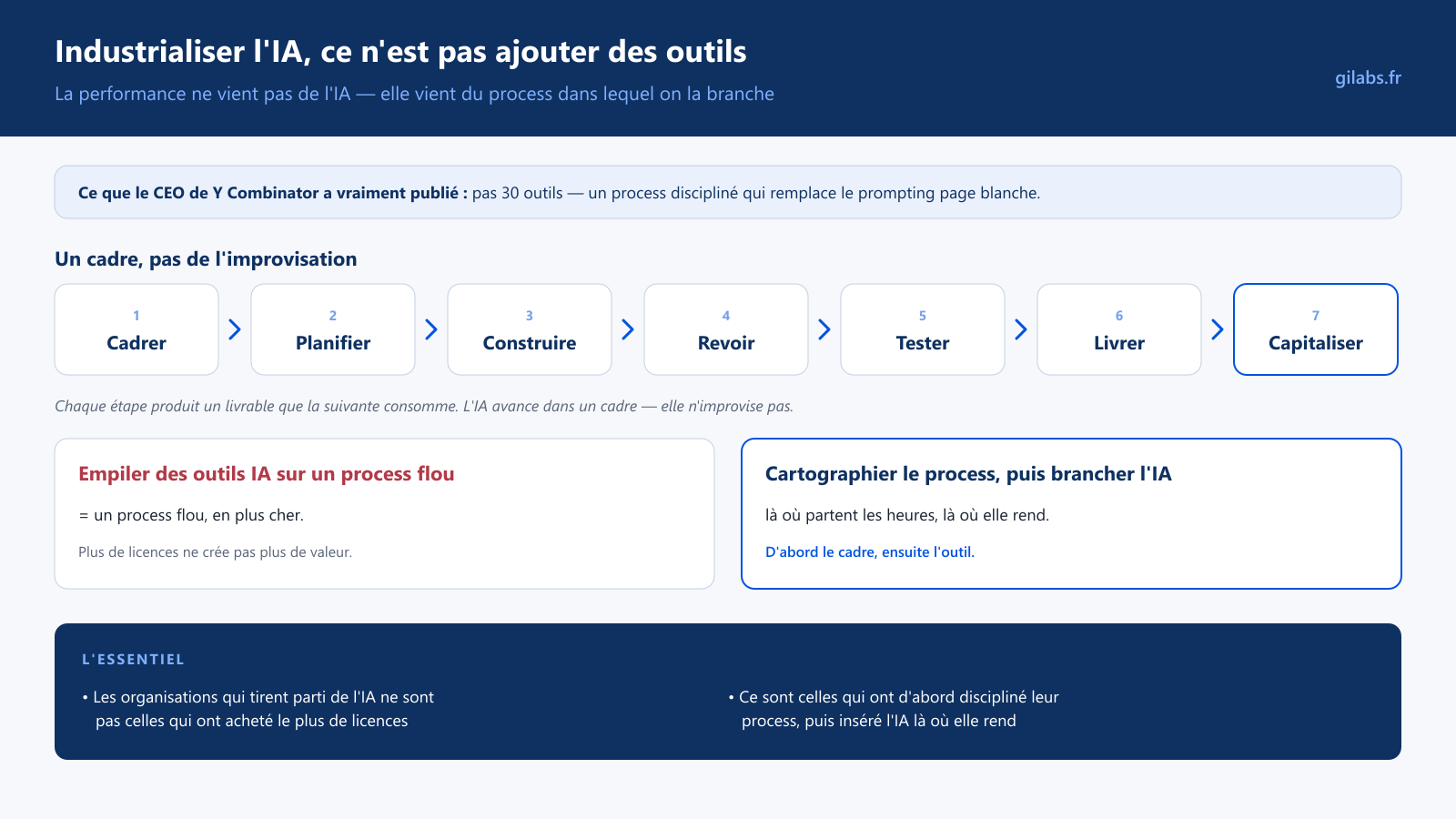
Garry Tan's AI software factory: the lesson is not in the tools
Y Combinator's president published his method to "ship like a team of twenty." The real lesson is not in the 30 tools he shares, but in the process they run on top of.
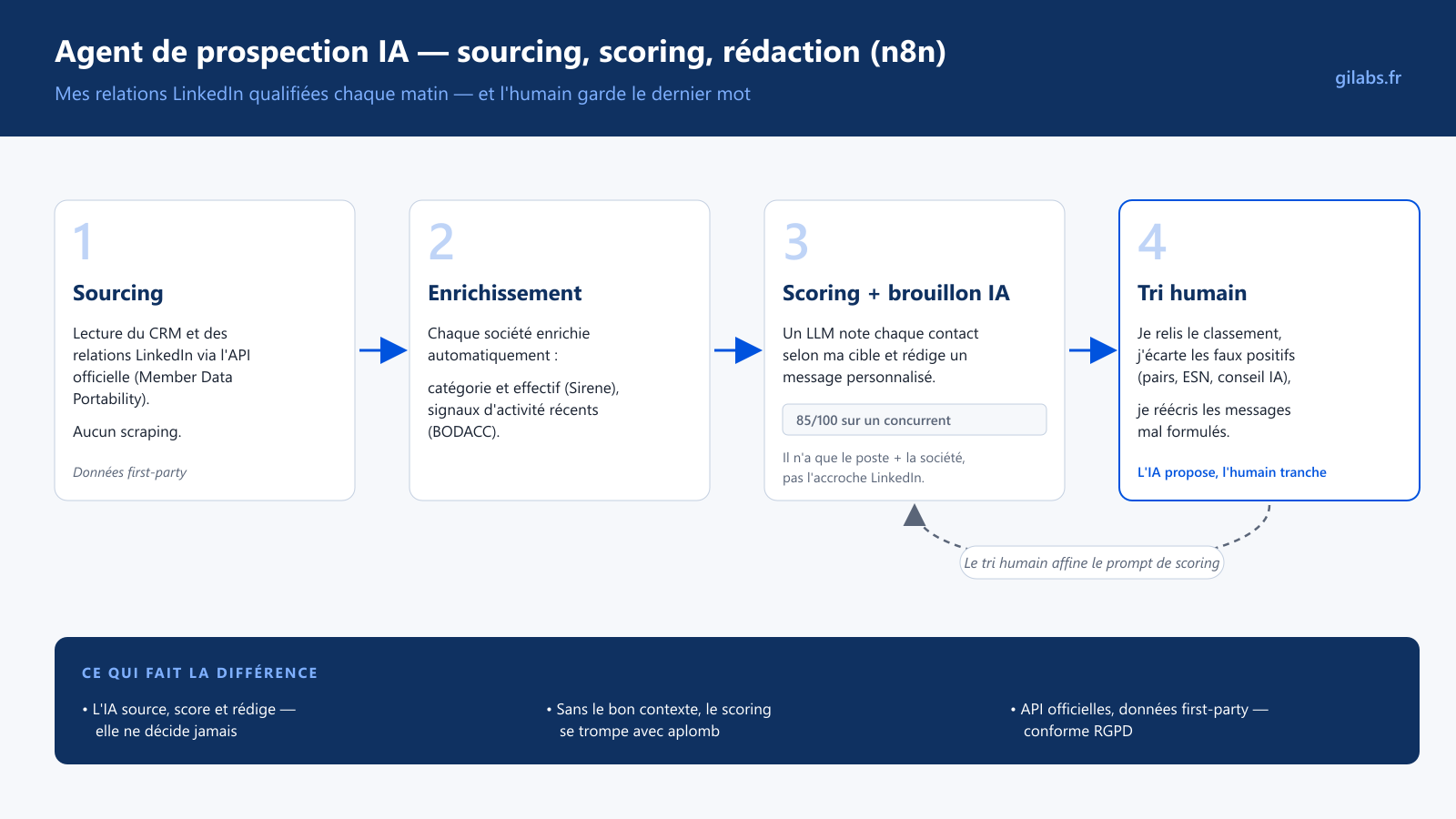
I built an AI agent for my own prospecting: here is where it gets it wrong
An n8n agent sourced, enriched and scored my prospects every morning. What it taught me best was one concrete case where a confident AI can be completely wrong.
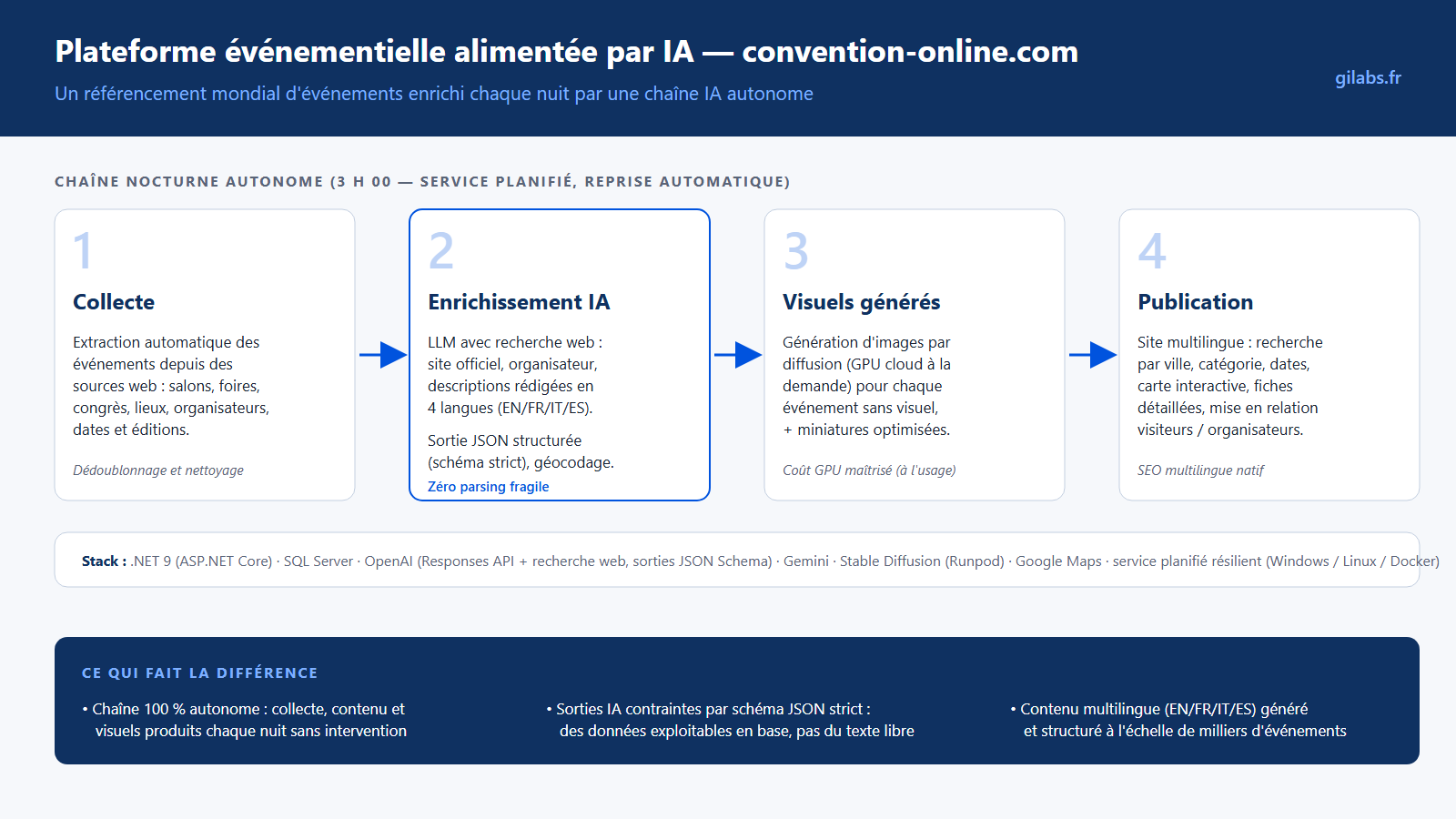
Zero human validation, and that is the right call: the Convention Online AI chain
One pipeline requires human validation at every step. Another one runs all night with nobody watching. How to decide where to set the dial, based on the real business stakes.

From scanned timesheets to the business database: the AI pipeline, step by step
Hundreds of scanned timesheets, keyed in by hand, with no systematic check. Here is the AI pipeline I designed for an industrial group, from the scan landing to the database write.

Why I chose Semantic Kernel over Python for AI in .NET
Holder of the Microsoft Applied Skills AZ-2005 credential, I chose to integrate AI into existing .NET systems rather than rewrite everything in Python. The reasoning, and the Semantic Kernel pattern.