
Employee voice recordings should never leave Europe: a rule set before the technology
To produce a reliable meeting summary, a leadership team first settled a matter of principle: where do voice recordings actually go? Three options compared, one chosen.
After a meeting, you often need to remember who said what. In a meeting room equipped with a video-conferencing system, that’s not so simple: the room’s microphone picks up everyone at once and blends all the voices into a single sound. Once that recording exists, it becomes very hard to tell, sentence by sentence, who was speaking.
The project behind this story had a clear goal: automatically produce a written summary, with the right name attached to each spoken line, even under those conditions.
Scroll to see all 6 steps →
A question settled before the technology was even chosen
Before asking how to figure out who’s speaking, a bigger question came first: once a voice recording exists, where does it actually go?
Leadership answered clearly: nowhere outside Europe. That rule didn’t come from a technical preference. It came from a specific and legitimate concern: the risk of employees’ voice recordings becoming accessible from outside the European Union.
Three ways to turn speech into text
Converting an audio recording into written text is something several technologies can do today. Three options were compared before making a choice.
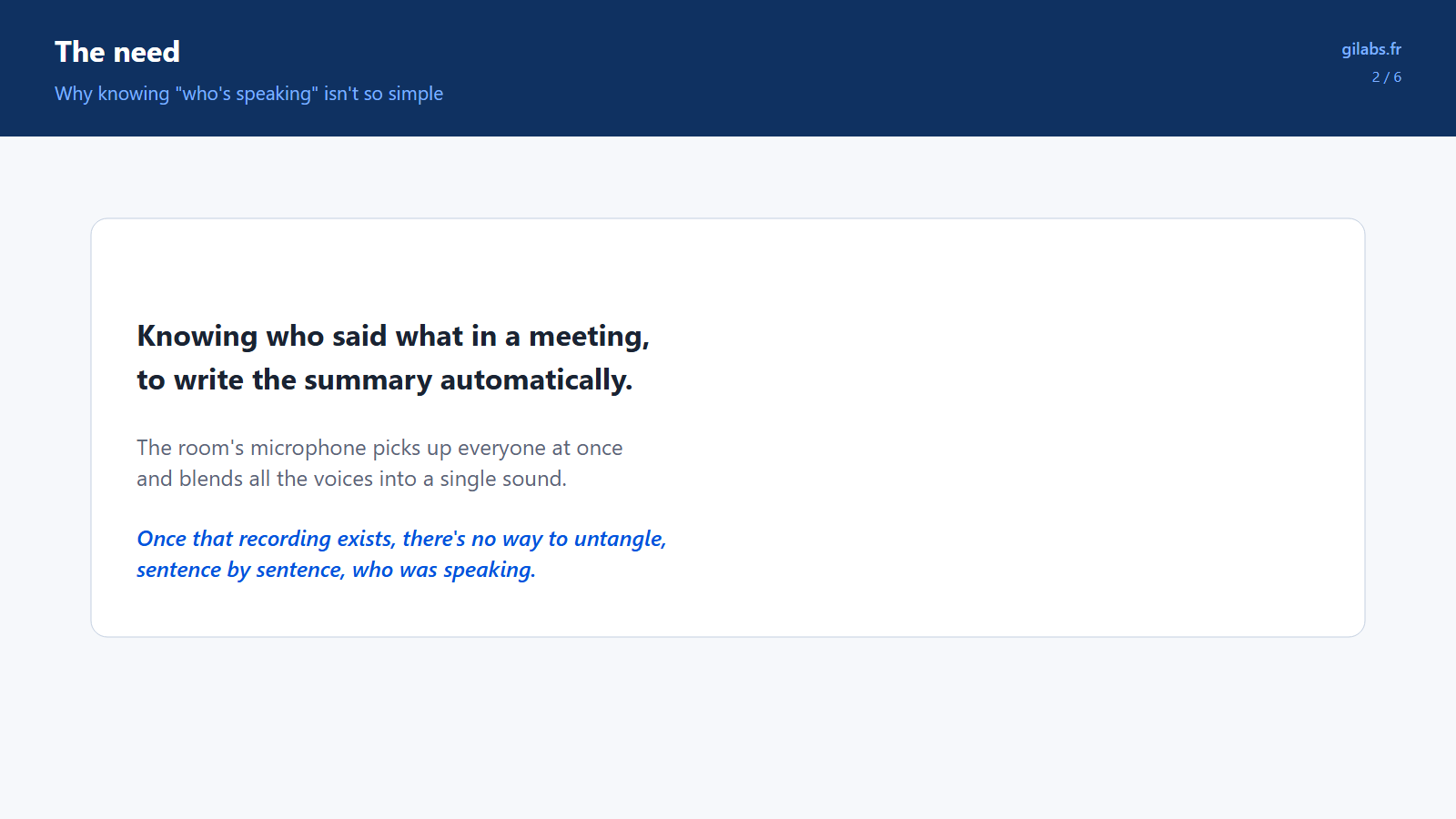
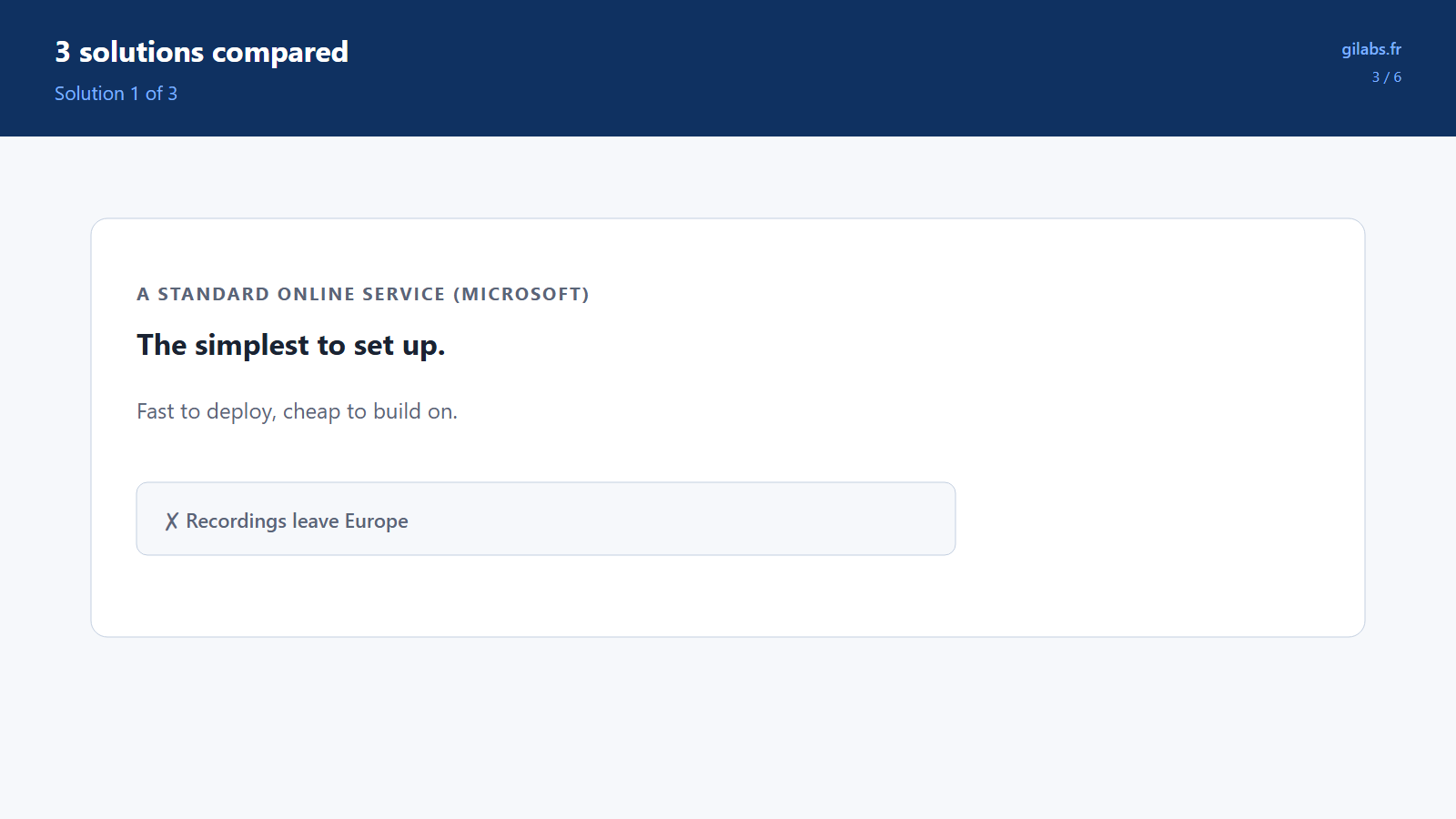
The first hands that conversion over to an online service provided by Microsoft. It’s the fastest to set up and the cheapest to build on, but the audio files then travel to servers located outside Europe.
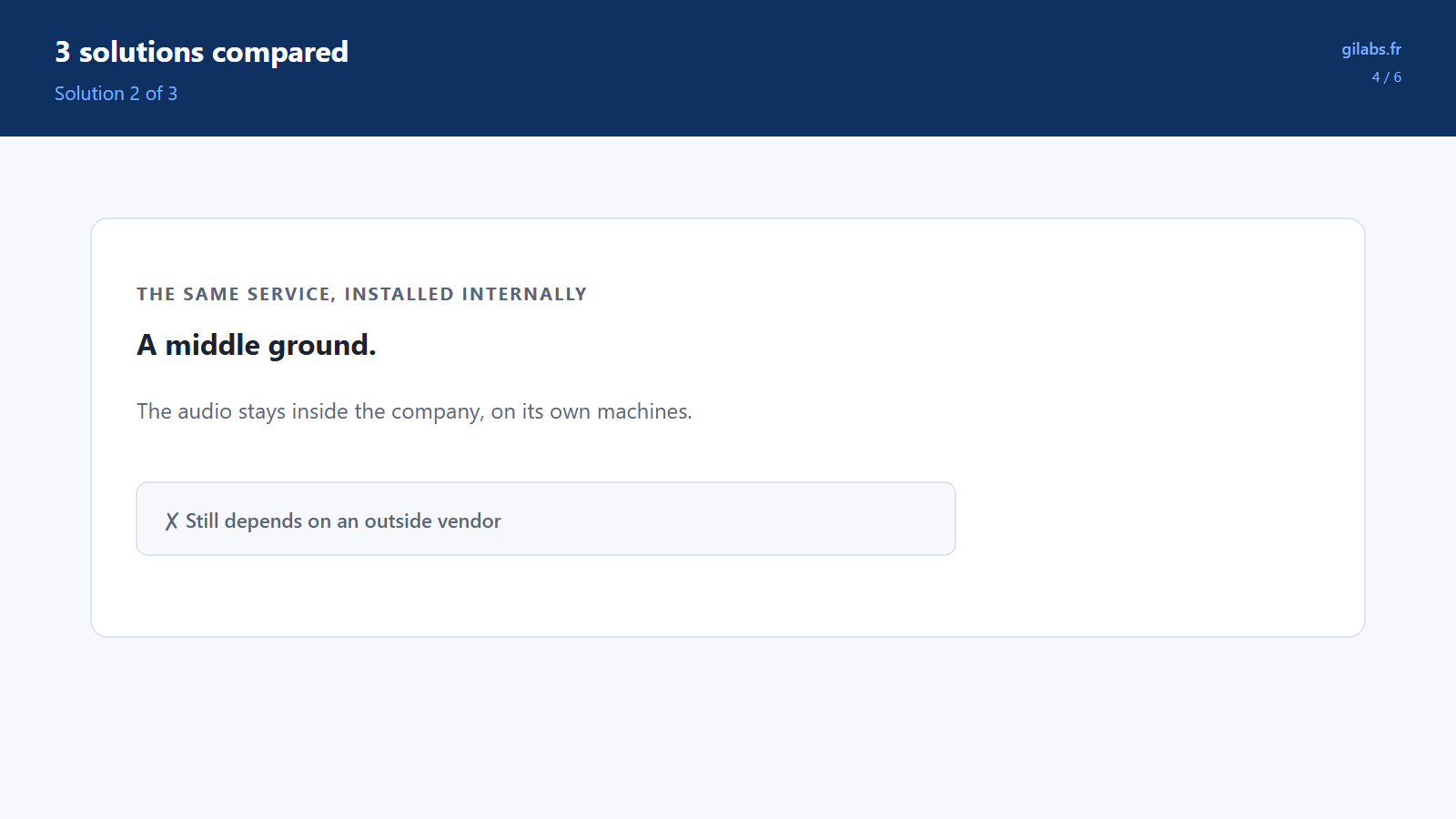
The second uses that same Microsoft service, but in a version installed directly on the company’s own internal servers. That’s a reasonable middle ground: the audio no longer leaves the company, but the solution still depends on an outside vendor and how that vendor’s system behaves.
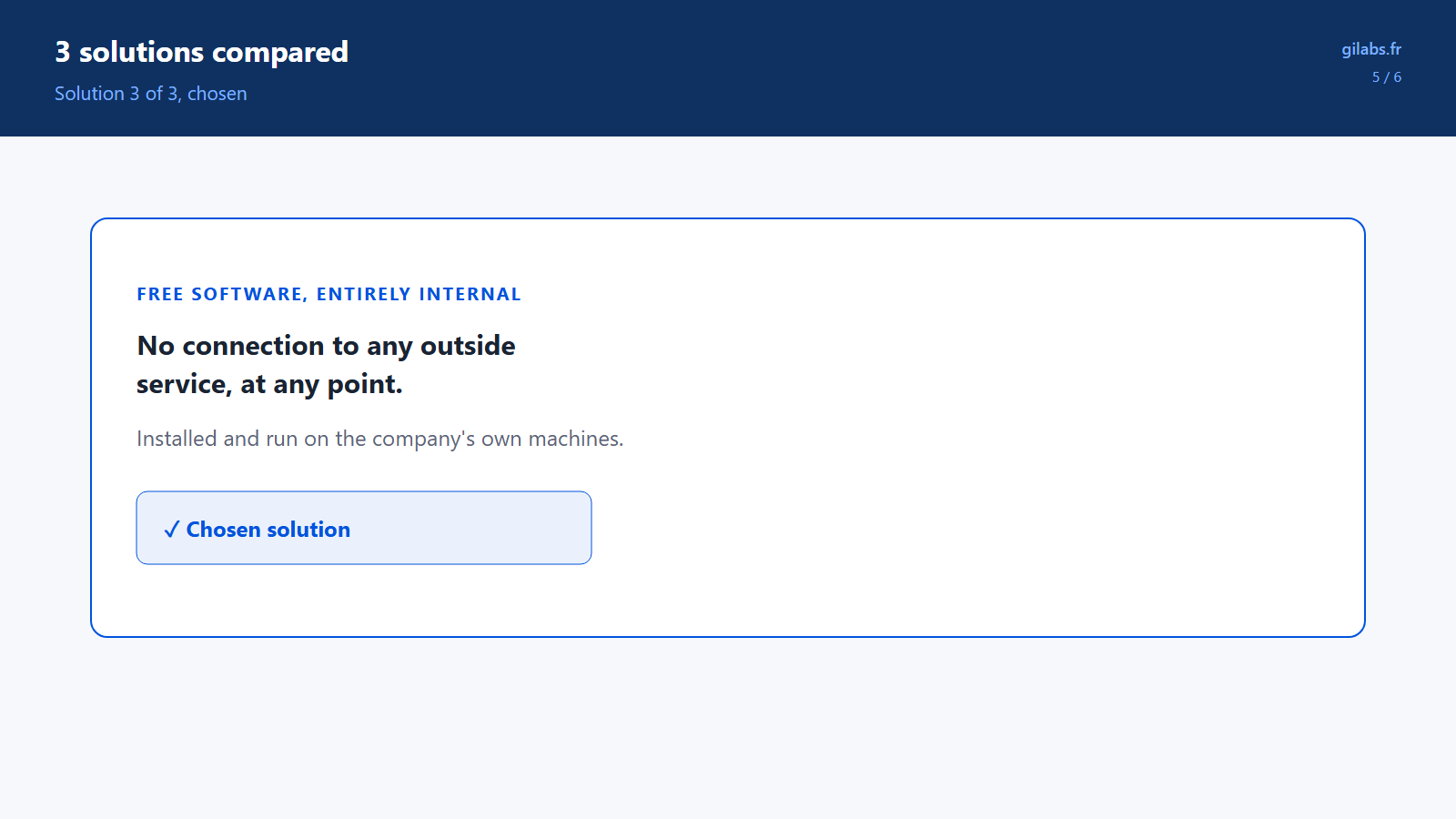
The third option works on a different principle entirely: using free, publicly available software capable of the same speech-to-text conversion, but installed and run entirely on the company’s own internal machines, with no connection to any outside service whatsoever. That third option is the one that was chosen.
What that choice actually changes
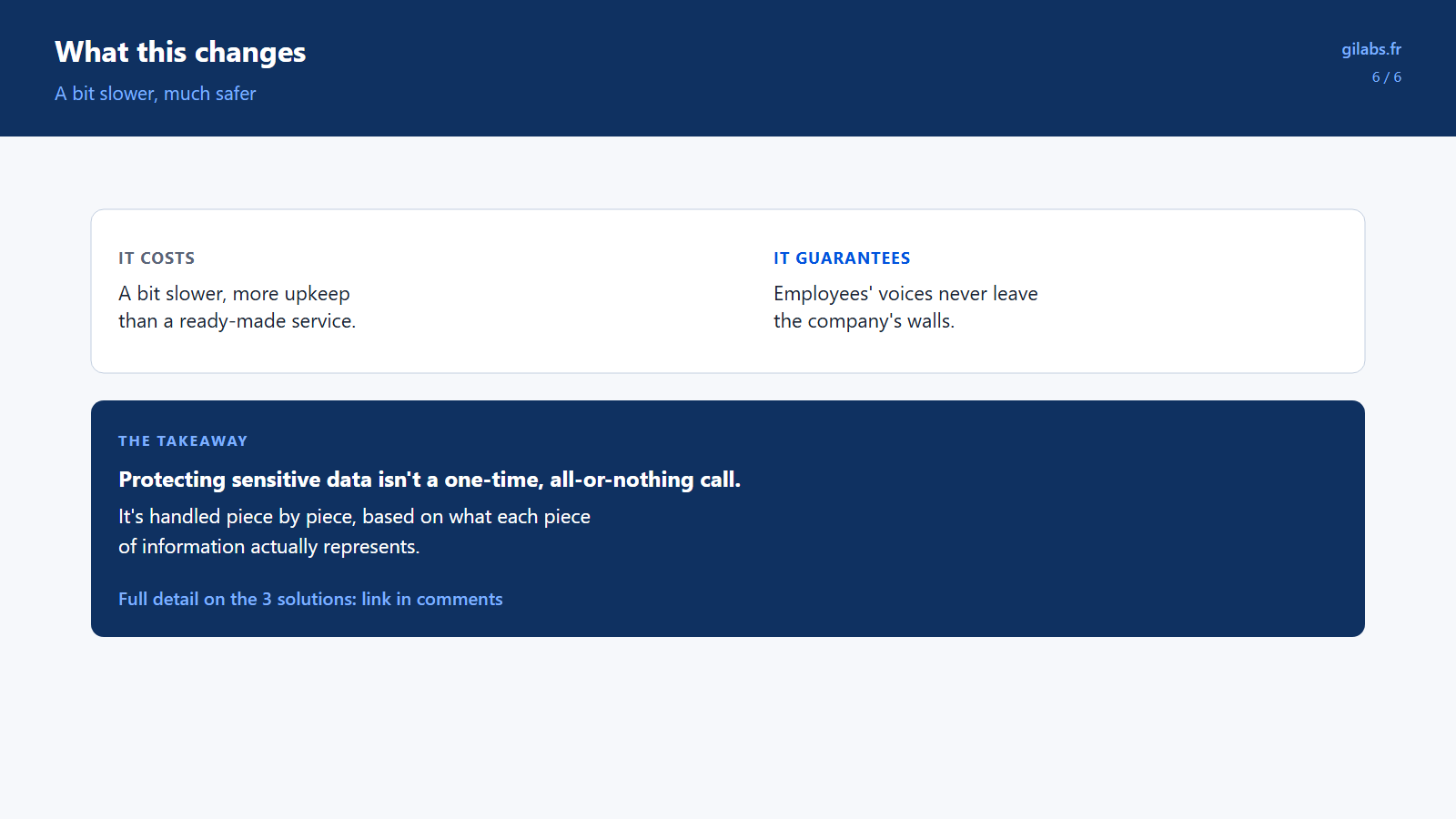
Choosing internally managed software over an off-the-shelf service comes with a real cost: the solution runs a bit slower, and it requires more ongoing maintenance work than a ready-made cloud service, which updates and scales itself automatically without anyone lifting a finger.
That extra cost was accepted in exchange for a simple, verifiable guarantee: employees’ voices never leave the company’s walls.
A protection that doesn’t cover everything, and that’s fine
One point is worth spelling out clearly, so it doesn’t create a false sense of total security: this rule only protects the voice itself. The text of the final summary, once generated, still travels through the company’s usual tools, just like any other work document.
That’s actually the most useful takeaway from this project: protecting sensitive data isn’t a decision you make once, for an entire system. It gets made piece by piece, based on what each piece of information actually represents. Here, people’s voices were judged sensitive enough to deserve separate treatment, before the very first line of the project was even written.
Take it further
For mid-caps and software vendors whose IT lives in .NET and SQL Server: AI developed inside your application (document extraction, agents, classification) with your business rules, your architecture, your code. Not another tool next to the IT system: a new capability inside it. I work in your repo, alongside your developers, to your team's standards.
Let's talk about your IT system →